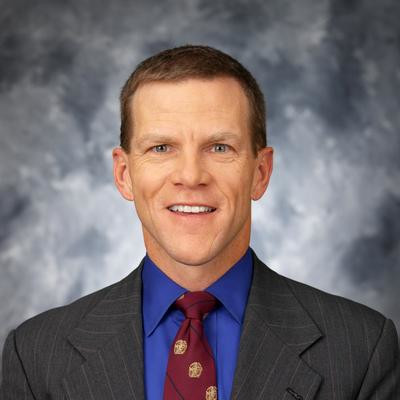


In July 2025, I came back to Cincinnati. Not for a conference or a short rotation. I came back to stay, and I came back with a purpose that has been forming in the back of my mind throughout 46 years of military service, eight combat deployments, and four decades of practicing trauma and critical care surgery. That purpose is this: the systems that save lives in a mass casualty event do not build themselves, and Cincinnati deserves better ones than it currently has.
In November 2025, I formally retired from the United States military after 46 years of service. That chapter closed with the Legion of Merit, the Bronze Star Medal for combat valor, and more deployments to war zones than I care to count quickly. What it opened is the chapter I am in now: taking everything those years produced and putting it to work for the community that shaped me as a physician.
What Eight Deployments Actually Produce
I completed eight combat tours in the Middle East between 2003 and 2021. I performed surgeries at forward facilities including the Craig Joint Theater Hospital in Bagram, Afghanistan. I served as trauma director at Balad Air Base in Iraq. I helped develop and lead the Critical Care Air Transport Team program, which provides ICU-level care during the aeromedical evacuation of critically injured service members from combat zones to definitive care facilities.
Under the systems my colleagues and I built over three decades, CCATT achieved a 99 percent survival rate for patients transported from combat zones. That number represents a genuine milestone in military medicine and a standard that I believe should inform how we think about civilian emergency systems.
Eight deployments do not just accumulate experience. They accumulate a very specific kind of clarity. You learn what systems hold under the worst conditions and what fails first. You learn that the difference between a patient who survives and one who does not is almost always a function of preparation, training, and coordination that happened long before any emergency began. You learn that improvisation in a crisis is a sign of inadequate preparation, not a badge of adaptability.
The Gap I Came Home to Close
Cincinnati is a city with genuine medical strength. The University of Cincinnati Medical Center is a major academic trauma center. The clinical expertise here is real and the institutions are serious. But clinical excellence inside a hospital is not the same as a prepared regional emergency response system. The two things require each other, and the connection between them is what I am working to build.
What I have seen in my early months back is a familiar pattern. Individual hospitals perform well. Individual EMS agencies are well-trained. But the coordination between those systems, the protocols for how they communicate and hand off patients under mass casualty conditions, the training that keeps those protocols functional rather than theoretical, and the exercises that test all of it together before a real event demands it — that connective tissue is where gaps exist.
Those gaps are not unique to Cincinnati. They exist in most American cities. Military medicine spent 20 years closing them in combat environments at a cost of enormous effort and real lives. The lessons from that effort are sitting in my head and in the peer-reviewed literature, and they apply directly to civilian emergency systems. That translation is the work I am here to do.
How Combat Medicine Shapes Civilian Preparedness
The knowledge transfer between military and civilian trauma medicine runs in both directions, but the combat environment produces certain insights that no civilian setting can replicate. Damage control surgery. Massive transfusion protocols. Tourniquet use and hemorrhage control. Coordinated aeromedical evacuation. These practices were developed and refined under operational conditions in Iraq and Afghanistan, and they are now standard in Level I trauma centers across the country.
The preparedness work I am focused on in Cincinnati draws on that same body of knowledge but applies it to a different problem set. A mass casualty event in a civilian city — a major accident, a natural disaster, an active threat — generates a surge of critically injured patients that the normal healthcare system is not designed to absorb. The question is how to build and maintain the capacity to absorb that surge, coordinate the response across multiple agencies, and move patients to the right level of care efficiently under conditions that will be chaotic and time-compressed.
I spent 25 years as a faculty member and clinical leader at the University of Cincinnati Medical Center. I was there when we built the trauma and critical care infrastructure that Cincinnati now depends on. I know this medical community and I know its capabilities. What I am bringing back is the operational perspective that comes from applying those capabilities under conditions no civilian training can fully simulate.
What I Am Building Now
I am working directly with regional hospitals, emergency medical services agencies, and public safety organizations across Greater Cincinnati to develop more coordinated and effective emergency response systems. That work involves reviewing existing protocols, identifying coordination gaps, building training programs that reflect combat-tested principles, and designing exercises that test the whole system rather than its individual parts.
The approach is not theoretical. It is built on the same foundation that produced a 99 percent CCATT survival rate: clear roles, rehearsed protocols, honest evaluation of what is working and what is not, and a culture that treats preparation as a non-negotiable rather than an administrative obligation. Recent coverage of this work has framed it accurately: the goal is not to make Cincinnati impressive on paper. The goal is to make Cincinnati ready when it matters.
I also authored more than 100 peer-reviewed articles over the course of my career on trauma care, critical care, and surgical innovation. That research foundation shapes how I evaluate evidence and how I think about system design. The same intellectual rigor that goes into a published study on aeromedical transport or hemorrhage management goes into how I approach a protocol review or a training curriculum for a regional EMS system.
What the Next Chapter Looks Like
Forty-six years of military service produced a clarity of purpose that does not diminish when the uniform comes off. Preparation is the difference between life and death on the worst day a person can face. That statement is not a slogan. It is the lesson I have paid attention to across eight combat deployments, more than four decades in operating rooms, and the careers of hundreds of physicians, nurses, and medics I have trained along the way.
Cincinnati is home. The city and its medical institutions gave me the foundation that made everything else possible. What I owe in return is everything I learned while I was away: the urgency, the standards, the systems thinking, and the commitment to preparation that the military and the combat environment demanded. That is what I am here to build, and I intend to build it well.